The biggest federal literacy reform in a decade
The READ Act
Share
The Problem:
All across the country, parents share one painful concern: Their kids are behind in reading, and their future is on the line.
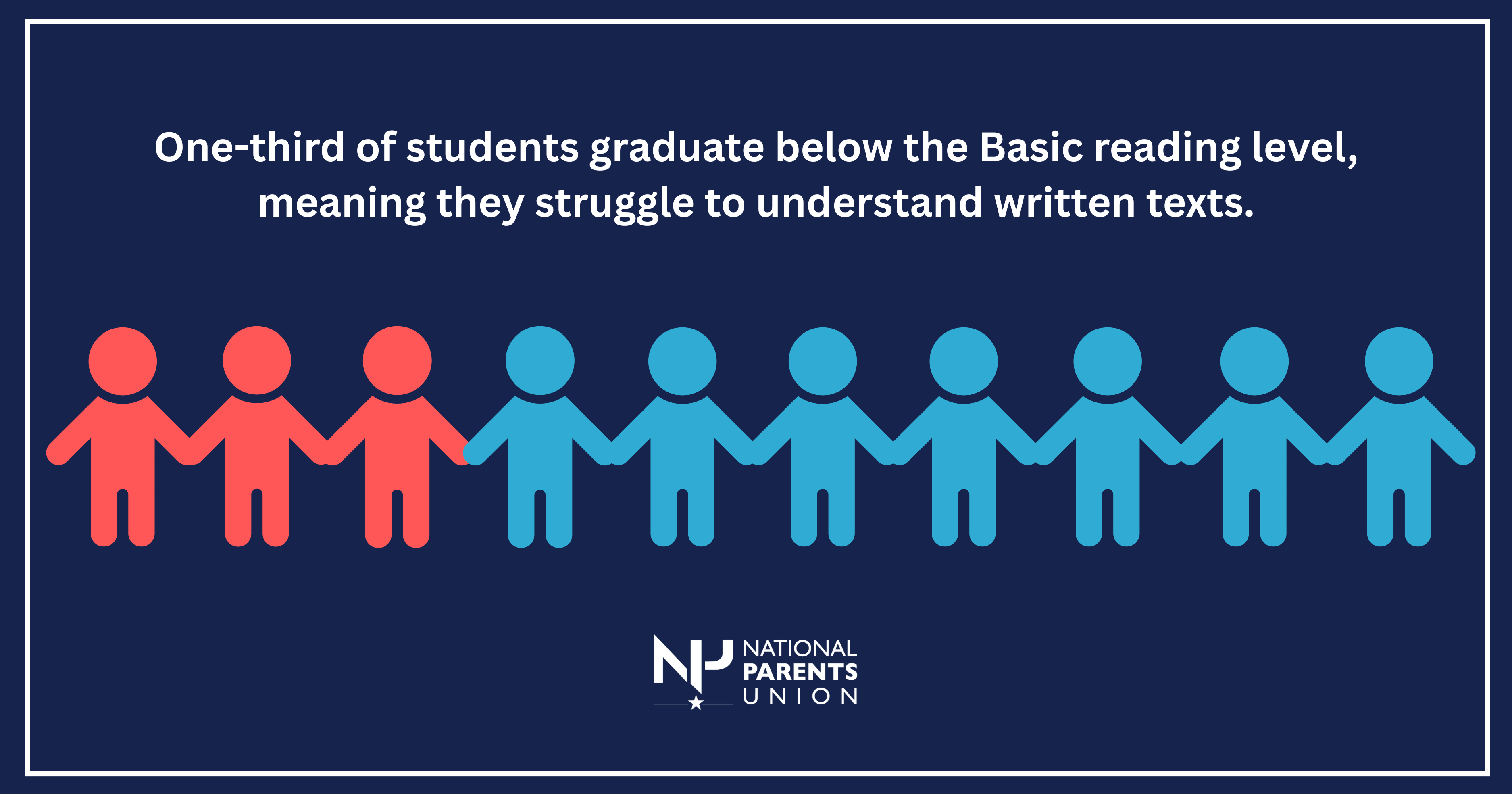
According to the National Assessment of Educational Progress, the nation’s most recent reading results were the lowest for twelfth graders since the exam began in 1992. Roughly one in three students is graduating below the Basic level. There is not a single state where the majority of students read on grade level. Our kids deserve to graduate 21st century literate. Instead, many are struggling just to understand basic texts.
What the READ Act does:
The READ Act was introduced by Senator Bill Cassidy (R-LA), Chairman of the Senate Health, Education, Labor and Pensions Committee, and Senator Maggie Hassan (D-NH), alongside Senator Jim Banks (R-IN) and Senator John Hickenlooper (D-CO). It modernizes the largest federal literacy grant program for the first time in more than a decade and makes evidence-based instruction the standard for state grant recipients rather than the exception.
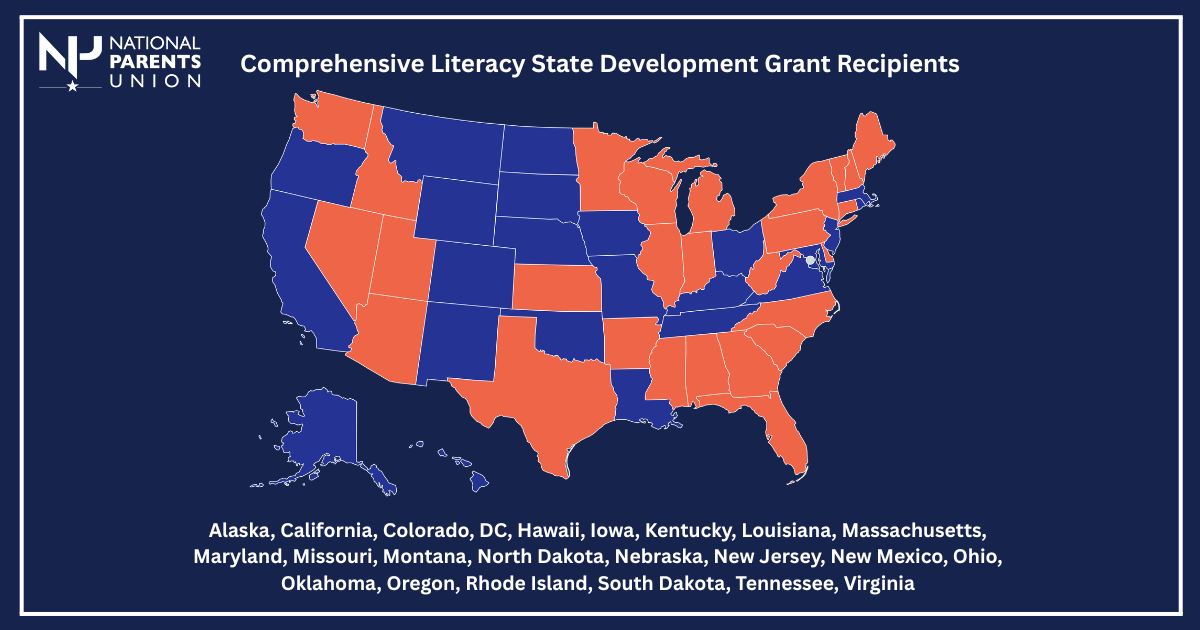
The bill updates and strengthens the federal Comprehensive Literacy State Development (CLSD) grant program, which currently helps 23 states invest in literacy policies and programs. The program has not been meaningfully revised since it was authorized under the Every Student Succeeds Act in 2015. In that time, states like Mississippi and Louisiana have made big investments in the science of reading and seen incredible gains. The READ Act scales those successes nationwide and encourages states to invest in:
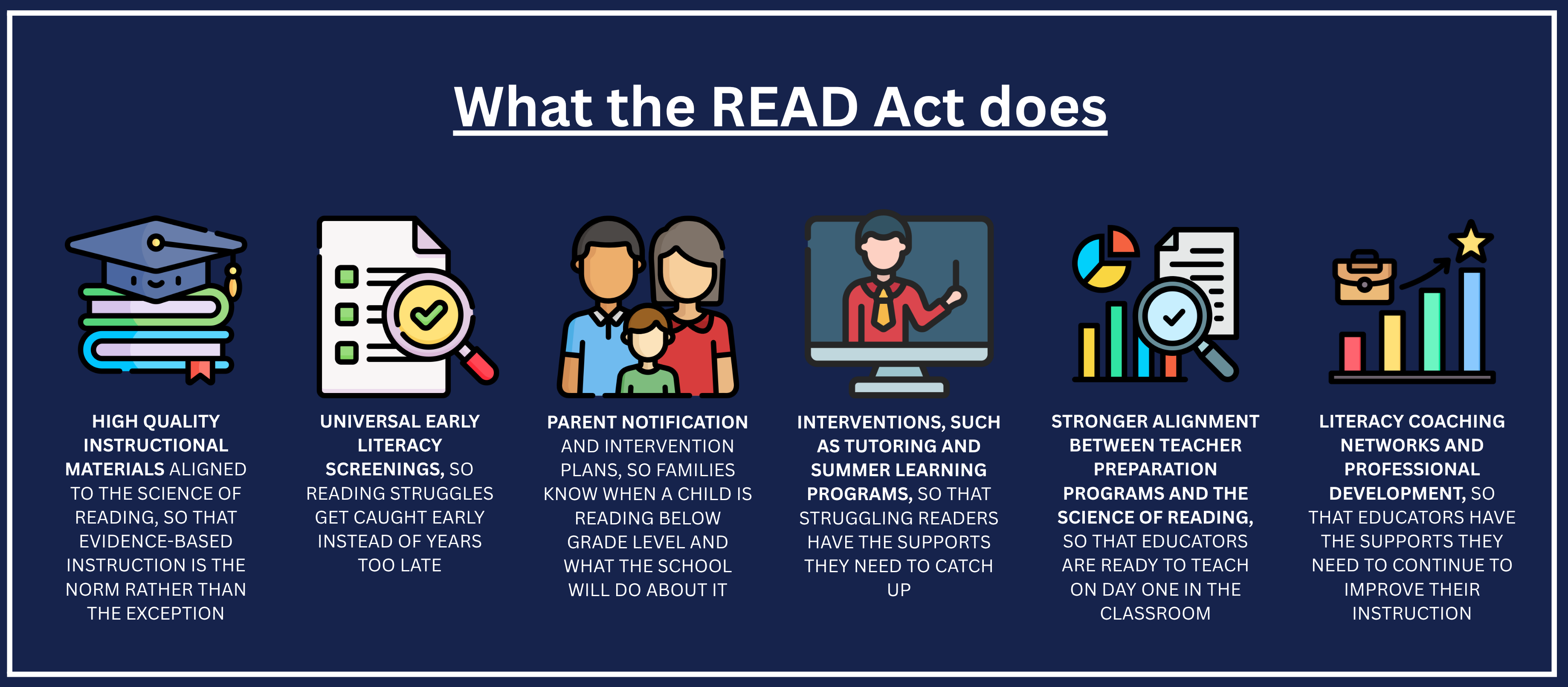
- High quality instructional materials aligned to the science of reading, so evidence-based instruction is the norm rather than the exception.
- Universal early literacy screenings, so reading struggles get caught early instead of years too late.
- Parent notification and intervention plans, so families know when a child is reading below grade level and what the school will do about it.
- Interventions like tutoring and summer learning programs, so struggling readers get the supports they need to catch up.
- Stronger alignment between teacher preparation programs and the science of reading, so educators are ready on day one.
- Literacy coaching networks and professional development, so educators have the supports they need to keep improving.
“Reading is more than just an education issue. It is a workforce issue, a competitiveness issue, and ultimately a moral issue that Americans want policymakers to address now. A Bipartisan Policy Center poll last December confirmed that Americans believe literacy is essential to opportunity, and they want leaders to work together to ensure it is available to all kids. By strengthening federal support for evidence-based literacy instruction and giving parents real information about their child’s progress, the READ Act makes good on the belief that every child can learn to read.” Margaret Spellings, former Secretary of Education under President Bush
Why Federal Action Is Needed:
Strong literacy policy at the state level produces real results. States like Mississippi and Louisiana have significantly improved reading outcomes by adopting policies aligned with the science of reading. Federal literacy grant programs have not been updated in more than a decade and do not do enough to push these evidence-based approaches.
The stakes reach far beyond the classroom. These are the children who will grow up to review your medical records, build your houses, and measure the dosage on your prescriptions. The United States cannot lead the global economy when our workforce struggles with foundational skills. Low literacy is estimated to cost taxpayers around $224 billion a year and businesses roughly $40 billion in lost productivity.
“We have known how to teach children to read for a very long time. The failure was never a lack of evidence. It was a lack of urgency and a lack of will. The READ Act takes what is working in states like Mississippi and Louisiana and makes it the standard instead of the exception, and it gives parents the honest information they need to fight for their own kids. There is nothing partisan about a child learning to read, and it is good to see Washington remember that.” Arne Duncan, former Secretary of Education under President Obama
The READ Act is endorsed by more than 120 local parent groups, literacy and dyslexia advocates, and national education partners, including: All4Ed, Bipartisan Policy Center (BPC) Action, Campaign for Grade Level Reading, Center for American Progress, Center for Learner Equity, Center for Strong Public Schools, Collaborative for Student Success, Defense of Democracy, Dignity In Schools Campaign, EdTrust, Educators for Excellence, Educators NOW!, Freedom to Choose Schools, FULCRUM, Hawaii Literacy, Honey Brown Hope Foundation, Hustle Mommies, KIPP Foundation, Metropolitan Area Advisory Committee on Anti-Poverty (MAAC), National Center for Learning Disabilities, National Council on Teacher Quality, Padres en Liderazgo, Parent Impact, Parents Amplifying Voices in Education (PAVE), Revolución Educativa, Saga Education, Students 4 Equity, Teach My Kid to Read, and TeachPlus.
“This did not start in Washington. It started at kitchen tables and in community meetings, with parents who knew something was wrong when their child could not read the words on the page. The READ Act is what happens when parents lead and Washington finally follows. The last time parents reshaped federal education policy on this scale was in 1975, when families fought to secure a free public education for every child with a disability. The READ Act carries that legacy forward. When parents organize, advocate, and persist, they transform the future for millions of children.” Keri Rodrigues, President of the National Parents Union