New Jersey’s Reading Crisis: Top-Ranked State, Failing Our Kids
Share
By Cathy Hasprunar
New Jersey’s reading scores are consistently among the best in the nation on the NAEP, commonly known as the “Nation’s Report Card.” Even after the pandemic, our fourth and eighth graders scored above the national average in reading and math, according to Chalkbeat’s analysis of the 2024 NAEP results.
So here’s the problem. Only 53% of New Jersey students are proficient in reading according to the NJSLA. As the NJ Education Report documented when the state released its results in December 2025, we peaked in 2019, when 57% of students achieved proficiency. Last spring 53% were labeled proficient, up one percentage point from the year before. And 45% of third graders were proficient in reading. Knowing that barely half the students in our schools are considered proficient readers makes me fearful as this generation prepares to enter the workforce. It also tells us there needs to be urgency to change the system and correct the trajectory of the current reading crisis.
Research tells us why third grade matters so much.
Connie Juel’s landmark longitudinal study, published in the Journal of Educational Psychology in 1988 and summarized by the American Federation of Teachers in “Waiting Rarely Works:Late Bloomers Usually Just Wilt,” found that the probability a child would remain a poor reader at the end of fourth grade, if the child was a poor reader at the end of first grade, was .88. Students who struggle past first grade are unlikely to ever catch up. But research also tells us this is fixable. Reading researchers Sharon Vaughn and Jack Fletcher, writing in American Educator,, concluded that there is ample evidence educational systems can be organized so that close to 95 percent of students will be reasonably successful readers when those systems are effectively implemented. The catch is that intervention has to happen early.
The National Council on Teacher Quality has ranked New Jersey near the bottom of the nation. In its June 2026 Teacher Prep Review, reported by Chalkbeat, of the 13 teacher preparation programs in New Jersey that participated, only The College of New Jersey’s undergraduate program earned an A grade. Seven programs earned an F, three earned a D, and two earned a C. Worse, 58% of New Jersey’s programs declined to participate at all. This means many of our teachers don’t have the support they need to recognize how to help struggling readers. And this is more than a failure to educate our teachers. NCTQ President Heather Peske called programs teaching outdated and disproven methods a form of “educational malpractice” against new teachers and the students they will serve.
Meanwhile, school districts have become experts at managing the conversation in a way that makes parents feel good about their child’s education while averting a hard look at the data.
Savvy parents who read the actual research get isolated and labeled “difficult.” Even worse, they’re often forced to spend thousands of dollars navigating a legal system that was never designed to support parents. In New Jersey, that system has a documented record of making families wait. As NJ Education Report recounted in April 2024, a 2018 report delivered to Gov. Murphy found administrative law judges were taking between 212 and 312 days to reach a decision, far longer than the law allows, which the report called “a travesty of justice”, against a 45-day legal deadline. A class action on behalf of 5,000 New Jersey families was settled in 2024, with plaintiffs’ legal fees capped at $4.75 million, paid by the state education department.
Settlement agreements include confidentiality clauses where parents are not allowed to discuss the terms of their agreement, so no one knows how common this is.
And parents who don’t have the knowledge or desire to battle a district? They spend thousands on private tutoring just to ensure the bare minimum: that their child learns to read on grade level. Parents without the resources have no choice but to watch their kids struggle. Imagine if, instead of fighting families, districts spent that money on effective early intervention and teacher training.
The system will never change if it is not challenged. As parents, we have the power to move it, but it will take hard work and bravery. It’s not easy to be that parent, and our voices will never be heard if we work individually. But if we each find our own tribe, we have the power to effect change collectively. It’s easy for districts to avert or silence one parent. It’s much harder to silence a group.
Your child’s success in school should not depend on your ability to advocate for your child. But that’s the reality we’re living in. So join the movement.
Read 4 NJ has partnered with Parents for Reading Justice to form parent cohorts across the state, where parents can receive free training on how to work collaboratively with school administration to effect change. Join the conversation and follow Read 4 NJ, Parents for Reading Justice and National Parents Union on social media. Grassroots movements such as these have the potential to change the system from the bottom up, and the more voices that contribute, the more impactful the change will become.
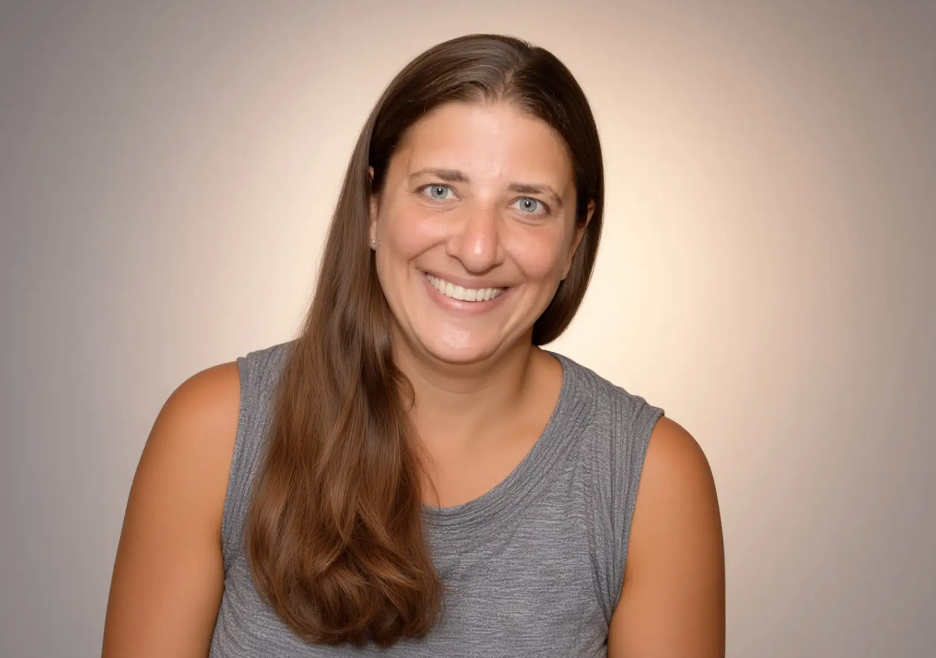
Cathy Hasprunar holds a Master of Science in Communication Disorders from William Paterson University and a Bachelor of Arts from Rutgers University. She has worked as a speech-language pathologist in a variety of settings for the past 22 years. Through the challenges she faced advocating for her daughters in their local school district, she developed a deep passion for ensuring that every student has the opportunity to learn to read. She is a member of the New Jersey Branch of the International Dyslexia Association (NJIDA) and the International Dyslexia Association (IDA), and has collaborated with NPU, Read 4 NJ, Decoding Dyslexia NJ, the Legacy for Literacy Coalition, and Parents for Reading Justice. She is also a JerseyCAN Parent Fellow. To strengthen her ability to advocate for better literacy outcomes for all students, she is currently pursuing her Orton-Gillingham certification through an IMSLEC-accredited program and working toward her dyslexia specialist certification. Cathy is an active member of the NPU’s Parent Power Collective.