Don’t Sleep on This Moment to Feed America’s Kids
Share
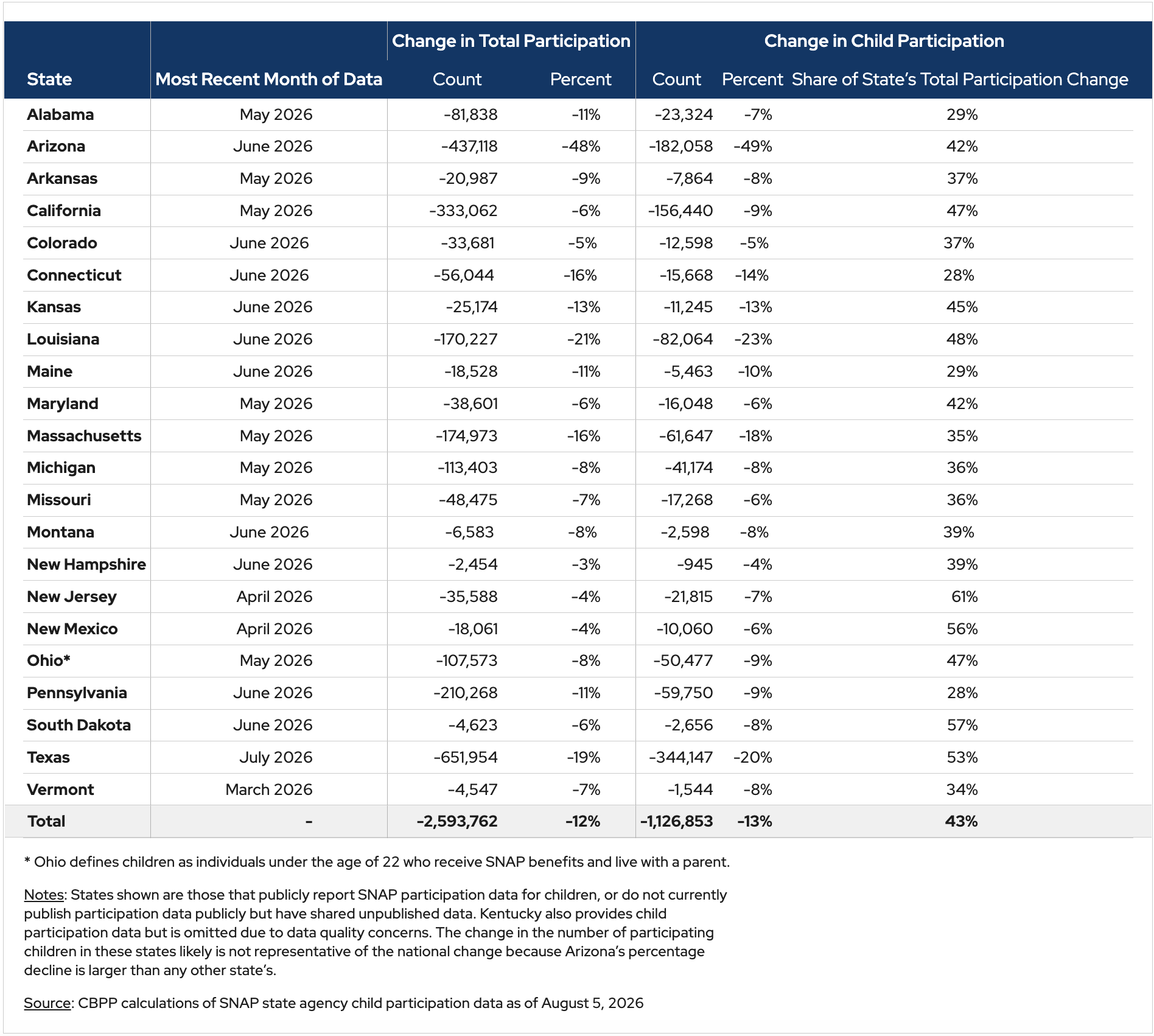
This year, an estimated 1.5 million kids have been cut off from their food benefits. The Farm Bill, which the Senate will re-consider in September, could reverse this course.
By Ariel Taylor Smith, Senior Director, NPU Center for Policy and Action
America’s food pantries have seen dramatic increases in the number of cars waiting in line to feed their families, and many are running out of food before the line ends. America’s affordability crisis, paired with funding cuts for the largest hunger reduction programs, has left kids hungry and parents across the country stressed out or skipping meals to ensure that their own kids are fed. Overall, the cuts to the Supplemental Nutrition Assistance Program (SNAP), our country’s largest food security program, has caused 4.5 million people to lose access to critical benefits that help them afford food.
Senate Democrats could reverse these cuts in September when the Senate reconsiders the Farm Bill. The Farm Bill failed to move out of the Senate Agriculture Committee after two Republicans missed the vote: Senator McConnell, who hasn’t been seen in 6 weeks, and Senator Tuberville, who is running for Governor in Alabama while his state is disproportionately devastated by the cuts.
Last year, during the passage of the One Big Beautiful Bill Act (OBBBA), Congress voted to cut our country’s food assistance program, SNAP, by 20%, marking the largest cut to the program in history. In OBBBA, they shifted costs of the benefit program to states and used the states’ error rates to inform how much each state has to pay. This has caused states to increase the burdens of applying and maintaining the benefit while reducing the number of staff supporting those who are trying to access the food security program. The full reduction of federal cost share won’t take effect until October 2027; therefore, these numbers will only continue to get worse.
Now, kids are paying the price. As they return to school, the impacts of these funding cuts compound: universal school meal eligibility is based on how many kids receive SNAP, which means that kids could be turned away from school lunch for not having enough in their lunch accounts to pay. Further, the community eligibility provision (CEP) allows schools and districts with high rates of students directly certified for free meals to provide free breakfast and lunch to all students, without requiring individual applications. If fewer families are connected to SNAP, many schools across the country will fall below the threshold needed to participate in CEP, putting universal school meals at risk.
In the greatest country on earth, it is unconscionable for our kids to be going hungry. Yet these SNAP cuts are pushing more children and families closer to that reality.
In Alabama, 81,838 people have lost access to their food benefit. In Arizona, just under half of all people who previously relied on the program have been kicked off – an estimated 437,118 people, 182,058 of whom are children.
As the Senate prepares to reconsider the Farm Bill this September, lawmakers have an opportunity to right a wrong that is hurting children and families across the country. Hunger is neither a Republican issue nor a Democratic one. It is an American issue. By coupling a strong Farm Bill with meaningful federal reinvestment in SNAP and robust appropriations, Congress can reduce pressure on states, strengthen food security, and help ensure that no child goes hungry.