The Case for Taking a Chance on Solutions
Share
By Erin Hogeboom
As parents, we are problem-solving experts.
A toddler refuses to wear shoes. We make it a game. A school schedule changes. We pivot. Child care falls through. We call in favors, rearrange meetings, and (somehow) make it work. Parenting is a daily exercise in problem-solving.
But some problems are bigger than any one family can solve alone.
In San Diego County, we’ve spent years living with challenges that feel impossible to escape. Like most communities across the country, we have a child care sector that remains perpetually underfunded, leaving families scrambling to find affordable reliable care while providers struggle to keep their doors open. In the South Bay, we have constant beach closures and air pollution warnings from Tijuana River Valley that impacts our health and greatly limits the places where our children should be able to play freely. And now, families are facing yet another wave of uncertainty as funding cuts and administrative barriers to programs like CalFresh (food and nutrition assistance program) and Medi-Cal (Medicaid program) threaten to make life harder when parents are already stretched to their limits.
It’s easy to feel powerless in the face of challenges so big and persistent. Many of us have spent years waiting for someone else to fix them. Maybe Sacramento will step in. Maybe Washington will act. Maybe next year’s budget will be different. Maybe the next elected official will finally prioritize families. Year after year, the challenges remain.
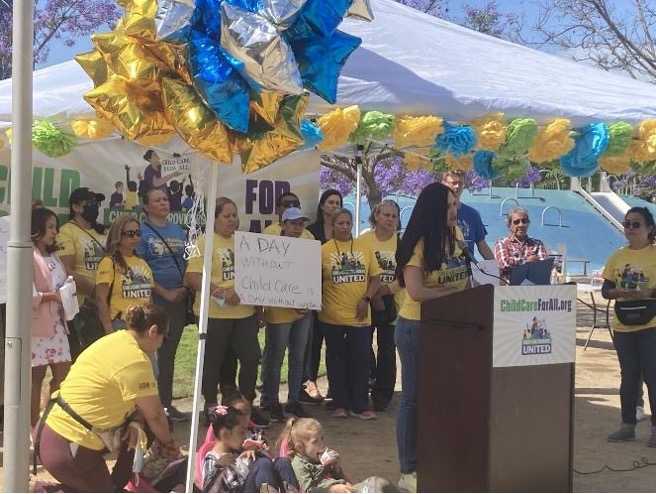
For decades, nationally, parents have been asking for quality, affordable child care, yet funding has never matched the need. Families sit on waitlists. Parents (mostly Moms) leave the workforce because care costs too much or simply isn’t available. Meanwhile, early educators, a workforce of 98% women, half of whom identify as Black or Brown, are among the lowest-paid workers in our entire economy. Child care workers earn less than 97% of all other occupations in the U.S. economy. We’ve built an economy that depends on child care, and expect the people providing that care to subsidize the system with their own poverty. While we all ‘agree’ child care matters, budgets rarely show it, and that pain is felt acutely at the local San Diego level.
The same community waiting game can be said about the ongoing pollution flowing through the Tijuana River Valley. This has become a symbol of what happens when serious problems are left to fester without the level of investment and urgency they require. We normalize conditions that shouldn’t be normal. We adapt to beach closures that should outrage us. We accept that someone else will eventually figure it out.
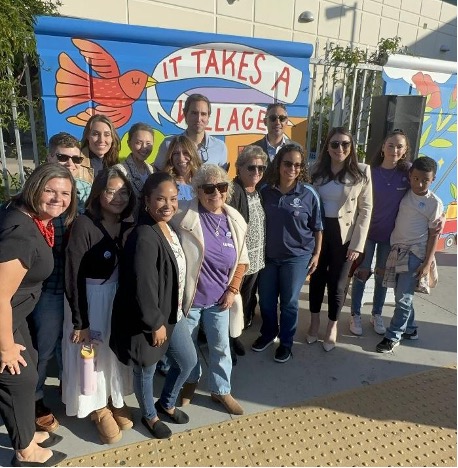
And now, with federal policy decisions creating new pressures on literal life-saving programs for families, many parents are asking a reasonable question: if we’re not getting help from anyone else, what can we do ourselves?
The answer, increasingly, is for us to organize locally. As a parent, I’ve come to believe that one of the most important lessons I can teach my son is that when he sees something isn’t working, he doesn’t just complain about it, but tries to make it better.
That’s why so many of us are taking a chance on a solution. Even if it’s not perfect, it’s better to take a chance than do nothing at all, where we’ve seen what the outcome is.
Our community is pursuing a local ballot measure because we believe San Diego families deserve more than promises. We deserve the opportunity to invest in solutions that match the scale of the challenges we’re facing, and see those dollars put to work locally. Instead of waiting for someone else to rescue us, we’re choosing to build something ourselves.
That doesn’t mean every problem disappears overnight. It doesn’t mean every disagreement vanishes. And it certainly doesn’t mean taking bold action is risk-free.
But parenting isn’t risk-free either.
Every day, we make decisions based not on guarantees but on possibilities. We enroll our children in new schools, sign them up for activities, move to new neighborhoods, and trust that the investments we make today will create better opportunities tomorrow. We understand that meaningful progress often requires taking a chance.
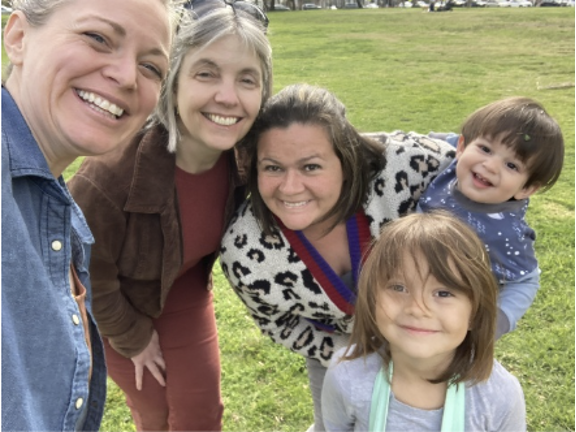
The real question isn’t whether seeking change comes with risk. The real question is whether doing nothing gets us any closer to the kind of San Diego we all want to live in.
Taking a chance on solutions means believing that our community can do better. It means recognizing that local action is sometimes the most powerful action available. And it means refusing to accept that today’s challenges are simply the way things have to be.
As parents, we spend our lives imagining better futures for our children. This ballot measure is rooted in that same hope: the belief that when a community rallies together, invests in itself, and chooses collective action over individual resignation, better outcomes are possible.
We often tell our kids to be the change they want to see in the world. Maybe it’s time for us to show them what that looks like.
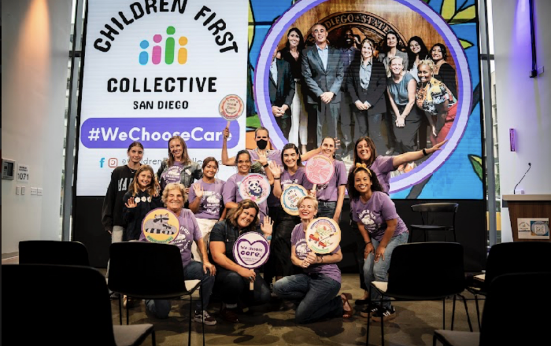
Erin Hogeboom has served as Director of San Diego for Every Child since 2019 after helping shape the organization’s vision as a key thought partner. She also co-leads the Children First Collective. A leader with local and national experience in nonprofit strategy, partnerships, and policy, Hogeboom previously managed the Feeding Kids Program at Feeding San Diego and served as Director of Strategic Partnerships for the National Girls Collaborative Project. Her career has spanned the globe, from serving as a Peace Corps agriculture volunteer in rural Paraguay to advancing education, refugee support, peacebuilding, and women’s advocacy through roles with the NGO Working Group on Women, Peace and Security, Raising a Reader, the International Rescue Committee, and the New York Peace Institute. An active civic leader, Hogeboom serves as Board Co-President of the San Diego Leadership Alliance. She holds a bachelor’s degree in International Security and Conflict Resolution from San Diego State University and a master’s degree in Global Affairs from New York University. Erin is an active member of the National Parents Union’s Parent Power Collective, and San Diego for Every Child is a valued partner in advancing our shared commitment to improving outcomes for children and families.
###
ABOUT THE NATIONAL PARENTS UNION
With more than 1,800 affiliated parent organizations in all 50 states, Washington, D.C. and Puerto Rico, the National Parents Union is the united, independent voice of modern American families. We channel the power of parents into powerful policies that improve the lives of children, families and communities across the United States. https://nationalparentsunion.org/